
ND: Prices, Trends, and Local Insights
Welcome to our used car market research hub for Towner ND. If you are comparing prices, watching inventory trends, or deciding when to buy, this page compiles local insights to help you make sense of the market. We track how mileage, model year, body style, and condition influence pricing in and around Towner, with a special focus on the features that matter for North Dakota driving such as four wheel drive, cold weather packages, and service history. You can browse current options on our used inventory, study recent sales patterns, and learn how to evaluate value beyond the asking price. Whether you are considering a truck for work, a compact for commuting, or an SUV for winter roads, the information below is designed to save you time and reduce uncertainty. Use it to compare similar vehicles side by side, set a realistic budget, and spot good opportunities faster.
This guide is updated regularly with real world observations from our team and market data relevant to buyers in Towner ND. For more research and tools, explore our used inventory, review sold vehicles for price anchors, and read expert tips on our blog. If you need general store information or policies while you shop, you can find quick links below to help you navigate the site.
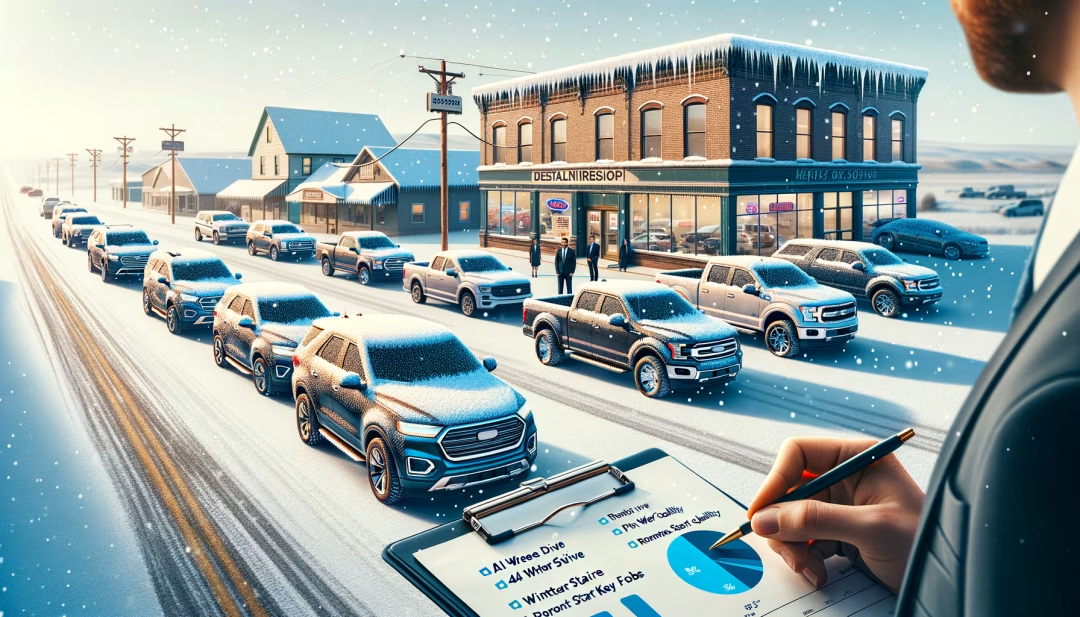
Towner ND used car market overview
The used car market in Towner ND is shaped by rural driving needs, long distances between towns, and winter conditions that can be severe. These factors influence both demand and pricing. Trucks and SUVs with four wheel drive or all wheel drive often command a premium, especially from late fall through early spring. Sedans and compact cars remain attractive for fuel economy and lower purchase prices, but condition, ground clearance, and tire quality play a larger role in buyer decisions than in milder climates.
Supply in smaller markets tends to be tighter, so comparable vehicles can vary in mileage and equipment more than in larger metro areas. That variation makes smart comparisons essential. When two vehicles look similar online, small differences such as a documented timing belt service or a newer set of winter rated tires can change real value by hundreds of dollars or more. The sections below break down what to watch and how to weigh tradeoffs.
What drives pricing in and around Towner
Local demand and weather are the two biggest forces behind used car pricing in Towner ND. The following elements typically move prices up or down. Use them as a quick checklist while comparing listings and reviewing history reports.
- Drivetrain and traction: Four wheel drive and all wheel drive add value, especially from October through March.
- Cold weather features: Remote start, heated seats, block heater, battery health, and recent coolant service increase desirability.
- Mileage bands: Price steps often occur around 60k, 90k, 120k, and 150k miles, tied to major service intervals.
- Ownership and records: One owner vehicles with documented maintenance reduce risk and usually sell faster.
- Tires and brakes: Winter rated tires and strong brake life can save immediate out of pocket costs after purchase.
- Accident history: Minor cosmetic incidents have a smaller impact than structural repairs or airbag deployments.
Seasonal patterns in North Dakota
Seasonality is real in northern markets. As temperatures drop, interest in trucks and AWD SUVs rises, often pushing prices and reducing days on lot. In late spring and summer, buyers shift toward fuel efficiency, family trips, and towing. That can be a good window for shoppers who want a winter capable SUV without the peak season premium. Watch local weather swings too. An early snow or extended cold snap can move inventory quickly, while mild stretches sometimes ease competition.
How to compare similar vehicles
The best way to compare two or more used cars is to normalize for the big variables: mileage, trim features, drivetrain, tire condition, and service records. Start by confirming the trim and packages, then adjust your price lens for drivetrain. Next, calculate a mileage adjustment using a simple rule of thumb. In this region, a difference of 10,000 miles can shift value by a few hundred dollars depending on age and model. Finally, assign value to near term maintenance. A fresh set of tires and a recent full brake service can reduce your first year cost, which is just as important as purchase price.
Evaluating condition for cold weather use
Condition checks take on extra importance in Towner ND. Beyond the basics, look for signs of reliable cold starts and stable winter performance. Inspect the battery manufacture date and test results if available, confirm the presence and operation of a block heater, and review coolant system service history. Ask about starter, alternator, and serpentine belt age on higher mileage vehicles. For trucks and SUVs, check transfer case fluid service and verify that four wheel drive engages smoothly. On any vehicle, check tire age and symbol. Three Peak Mountain Snowflake tires are designed for winter grip and can transform daily drivability.
- Battery test and age within the last 12 months
- Coolant system inspected, no leaks, correct freeze point
- Verified heater and defroster performance
- AWD or 4WD service history where applicable
- Winter rated tires with solid tread depth
Understanding price anchors in Towner ND
A price anchor is a known sale price or a consistent market range for a specific year, make, model, and mileage bracket. In smaller markets, a few recent sales can set the tone for weeks. Studying sold vehicles creates realistic expectations and helps you spot underpriced options quickly. Use our sold inventory to review closing prices and common equipment sets for the vehicles you are considering. Cross check current active listings to see if any unit offers similar features at a lower total ownership cost over the first year.
When you compare anchors, ensure you are matching drivetrain, trim, and mileage within a tight band. A 2018 SUV with front wheel drive cannot anchor a 2018 SUV with all wheel drive in winter. The difference may look small until you face a December storm. Match what matters most for your daily use.
Financing and the total cost of ownership
Financing affects affordability and monthly budget more than sticker price alone. Even a small rate change or a few months difference in term can move total cost by hundreds over the life of a loan. If you are comparing two vehicles that differ by a modest amount, check how that change plays out in monthly terms and interest paid. Sometimes the better equipped or lower mileage vehicle costs only a few dollars more per month but saves on maintenance within the first year.
Shoppers with building or recovering credit can also find options designed for practical payment plans. Reviewing educational pages like our used car financing resources and second chance auto financing guides can clarify how approvals work, what documents to prepare, and how to estimate a sensible payment relative to income and insurance costs.
How to research efficiently
Effective research balances breadth and depth. Start broad to identify two or three models that fit your needs. Then go deep on those models with service intervals, common issues, and parts availability. Use history reports to confirm title status and maintenance. Read a few owner forums for real world notes, but prioritize documented inspections over anecdotes. Finally, time your search around local seasonality and watch inventory updates to catch good fits early.
- Define must have features like AWD, seating, towing, or remote start.
- Shortlist two or three models that meet those needs and compare trims.
- Use history reports and service receipts to validate care.
- Track market changes weekly to spot price movement.
Common pitfalls to avoid
Avoid overvaluing cosmetic add ons while undervaluing mechanical readiness. A clean interior is great, but recent tires, brakes, and fluids matter more for safety and real cost. Be cautious with unusually low prices, especially if records are thin or the vehicle requires immediate deferred maintenance. Confirm that any aftermarket remote start, lift kit, or tuning was installed professionally and does not void warranties. If a listing leaves out major details such as drivetrain or tire brand and age, ask direct questions before you drive long distances to inspect.
Helpful links while you research
Explore nearby market snapshots
Market patterns in neighboring counties can influence availability and price, especially for popular trucks and SUVs. If you are willing to widen your search radius, compare these regional research pages for more context and recent observations.
Related buyer education
If you want to go deeper on budgeting and verification steps, these education pages offer structured checklists, financing basics, and region specific advice. They can help you turn research into a clear plan and prevent missed steps at the finish line.
Quick glossary for shoppers
AWD or 4WD: Drivetrains that deliver power to all wheels for traction. Helpful on snow and gravel. Trim: A package of features on a model like audio, safety, and comfort upgrades. History report: A record of title status, accidents, and some service entries. Towing package: Hardware like hitch, wiring, and cooling upgrades for hauling. Three Peak Mountain Snowflake: A winter tire rating that meets a snow traction performance standard.
Frequently asked questions about used car market research in Towner ND
Next steps for smart shoppers
Use the insights above to build a short list of vehicles that fit your driving and budget. Monitor inventory updates, confirm maintenance and tire details upfront, and compare your finalists with a simple cost of ownership worksheet. With a clear plan and the right local context, you can move quickly when a good match appears and feel confident in your choice long after the first snow arrives.
Office Hours
Monday
Tuesday
Wednesday
Thursday
Friday
Saturday
9:00 am - 5:00 pm
9:00 am - 5:00 pm
9:00 am - 5:00 pm
9:00 am - 5:00 pm
9:00 am - 5:00 pm
Closed
